পণ্য পরামর্শ
আপনার ইমেল ঠিকানা প্রকাশ করা হবে না। প্রয়োজনীয় ক্ষেত্রগুলি চিহ্নিত করা হয়েছে *

 ইংরেজি

Protective Handwear Guide
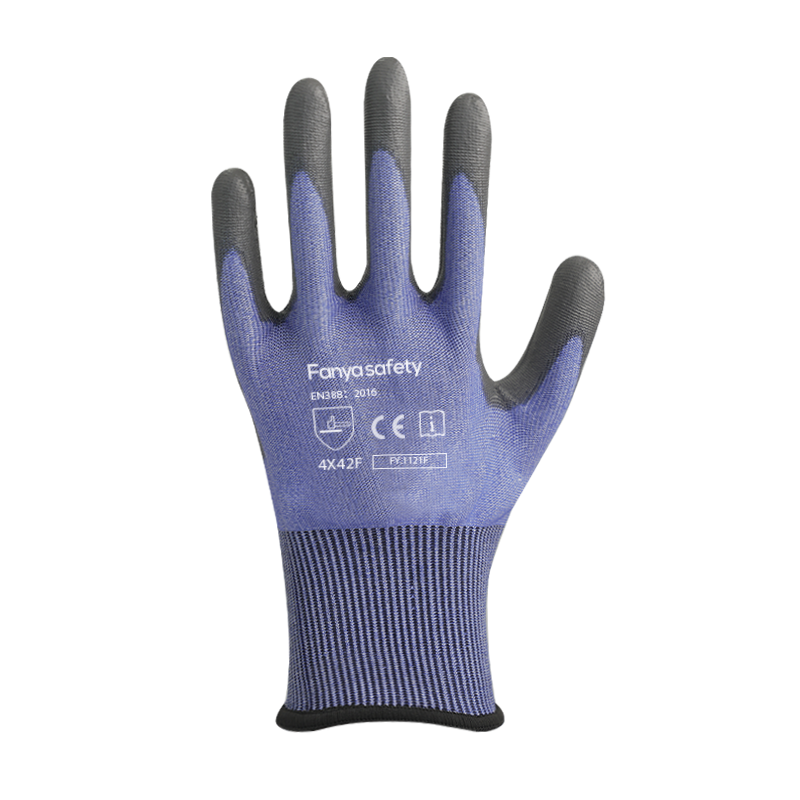
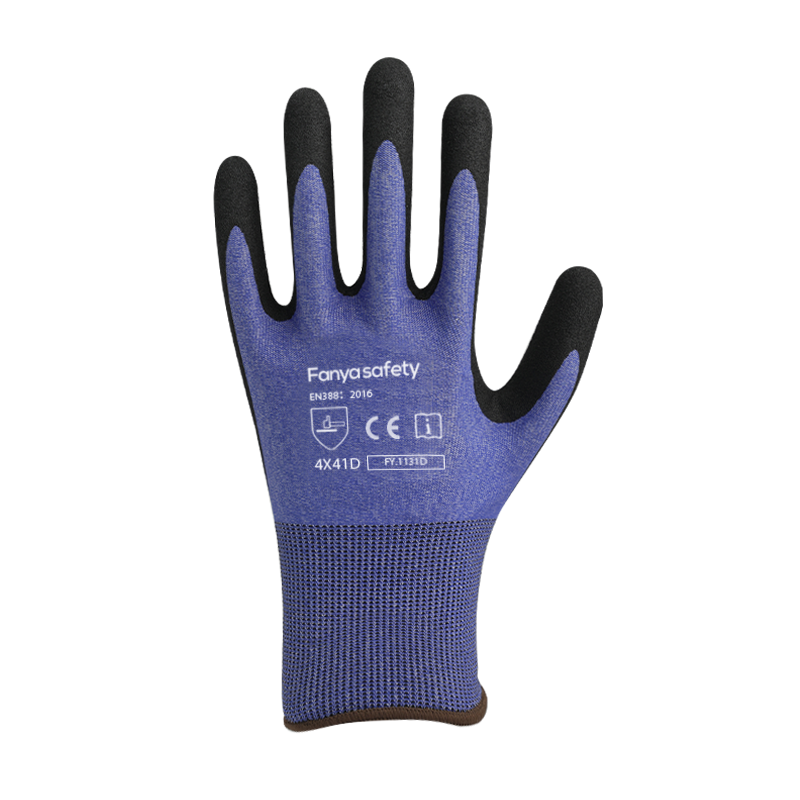
Blue gloves are widely used in food processing, medical prep, janitorial, and light industrial work because the color makes contamination visible at a glance. When the job also involves sharp tools, blades, or abrasive materials, choosing blue gloves with cut resistant construction keeps workers both visible and safe. This guide walks through every factor that matters — materials, cut levels, thickness, fit, and real-world performance — so you can pick the right glove the first time.
Food safety auditors across the industry consistently cite glove fragment detection as one of the leading contamination concerns on production lines. Blue is not a color that occurs naturally in most raw ingredients — meat, grain, vegetables, dairy — which means a torn piece of blue glove against a conveyor belt or product surface stands out immediately to a quality control inspector. The U.S. Food and Drug Administration's guidance on foreign material contamination specifically recommends that processing facilities use visually distinctive glove colors, and blue has become the dominant industry choice for exactly this reason. Some facilities combine blue gloves with metal-detectable additives for a two-layer detection system.
In facilities that use color-coded PPE by zone or task, blue is often reserved for food contact or clean-room areas, while other colors mark maintenance or chemical handling roles. This visual coding system reduces cross-contamination risks and helps supervisors verify at a distance that workers in a given zone are wearing the correct glove type. Standardizing on blue gloves across an entire department also simplifies purchasing and inventory, because one SKU can cover the whole shift rather than managing multiple colors for overlapping roles.
Glove compliance — workers actually keeping gloves on throughout a shift — is a persistent challenge for safety managers. Studies in occupational health literature have found that glove comfort, fit, and dexterity are the primary reasons workers remove PPE prematurely. Blue gloves from reputable manufacturers are now available in a wide range of materials and thicknesses, meaning there is a blue option that suits nearly every hand size, task type, and temperature condition. When workers have comfortable, well-fitting gloves, compliance rates improve, and the color becomes part of a positive safety culture rather than a frustrating uniform requirement.
Cut resistant gloves are not all the same. The term covers a wide spectrum of products, from lightweight liner gloves that add modest protection against paper cuts to heavy-duty gauntlets built to withstand contact with industrial blades. Understanding what makes a glove genuinely cut resistant — rather than just marketed as such — requires looking at the fiber content, the construction method, and the standardized test score that corresponds to real-world cutting forces.
The core of any cut resistant glove is its fiber blend. Several high-performance fibers have become standard in the industry:
Two primary standards govern how cut resistance is tested and communicated to buyers. In the United States, ANSI/ISEA 105 uses a TDM (Tomodynamometer) machine that draws a blade across the glove material under a controlled load, measuring the number of grams required to cut through the fabric. The result is mapped to a nine-level scale from A1 (minimum 200 grams of force) to A9 (minimum 6,000 grams). In Europe and much of the rest of the world, EN 388 uses a different rotary blade method and assigns cut levels from 1 to 5, with an additional impact protection level for newer gloves. When comparing products, confirm which standard the rating refers to — an EN 388 Level 3 glove is not equivalent to an ANSI A3 glove.
| ANSI/ISEA Level | Minimum Cut Force (g) | Typical Application | Common Fiber Blend |
|---|---|---|---|
| A1 | 200 | Light assembly, packaging | HPPE / Nylon |
| A2 | 500 | Sheet metal handling, light stamping | HPPE blend |
| A3 | 1,000 | Automotive parts, glass handling | HPPE / Glass fiber |
| A4 | 1,500 | Food processing, meat cutting | HPPE / Steel blend |
| A5 | 2,200 | Butchery, recycling, scrap metal | HPPE / Steel / Glass |
| A6 | 3,000 | Heavy butchery, industrial blade work | Steel core / Aramid |
| A7–A9 | 4,000 – 6,000+ | Chainsaw, heavy industrial blade | Full steel mesh or multi-layer composites |
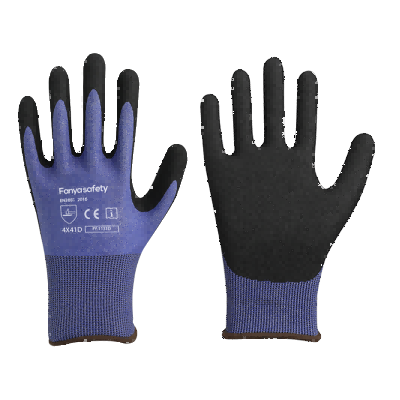
Getting both the blue color and reliable cut resistance in the same glove is not a simple task. The fibers used for cut resistance — HPPE, aramid, and steel — are naturally white, yellow, or metallic in appearance, and they do not accept standard fabric dyes the same way cotton or nylon does. Manufacturers use several techniques to produce a genuinely blue cut resistant glove without compromising the structural integrity of the protection fibers.
The most common approach is a composite knit structure where the protective HPPE or steel core fiber is wrapped or blended with a dyeable outer fiber such as nylon or polyester. The outer fiber can be piece-dyed to a consistent blue shade, while the protective core remains intact. This method produces gloves that are visually blue throughout, pass wash cycles without significant color bleed, and maintain their cut resistance rating even after repeated laundering at temperatures up to 60°C.
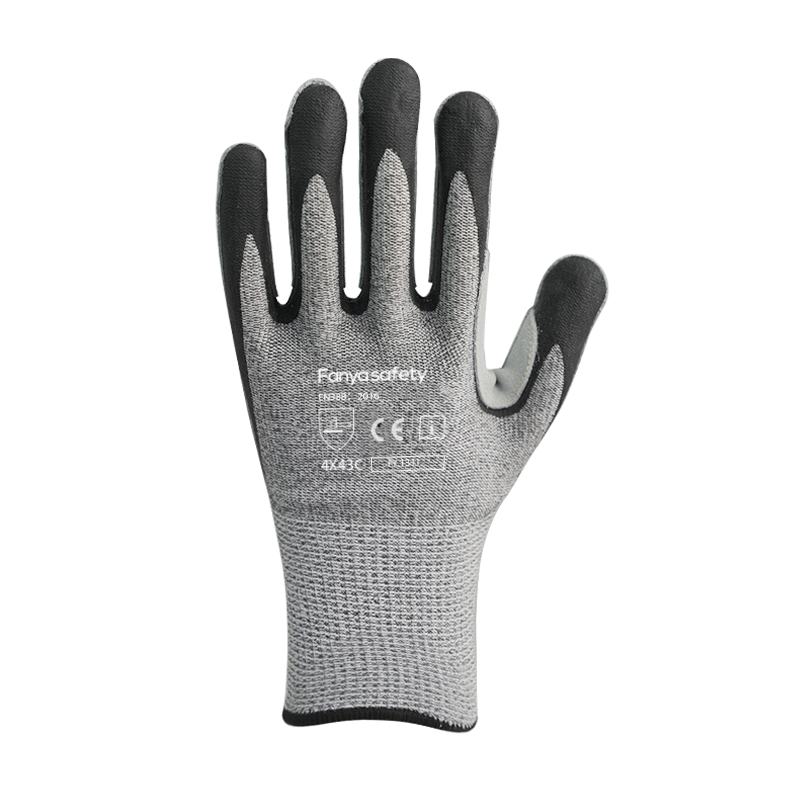
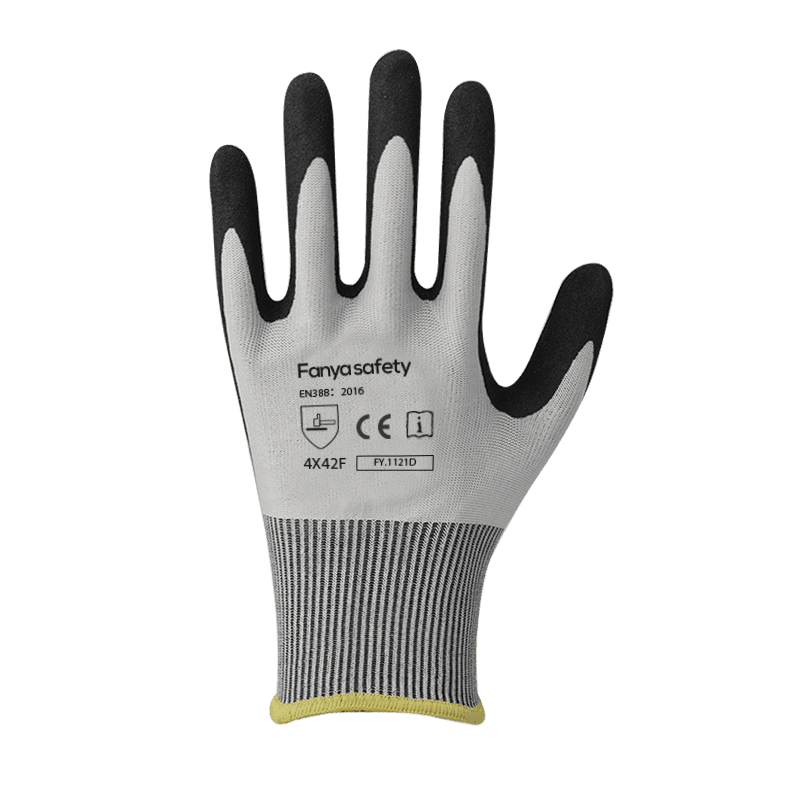
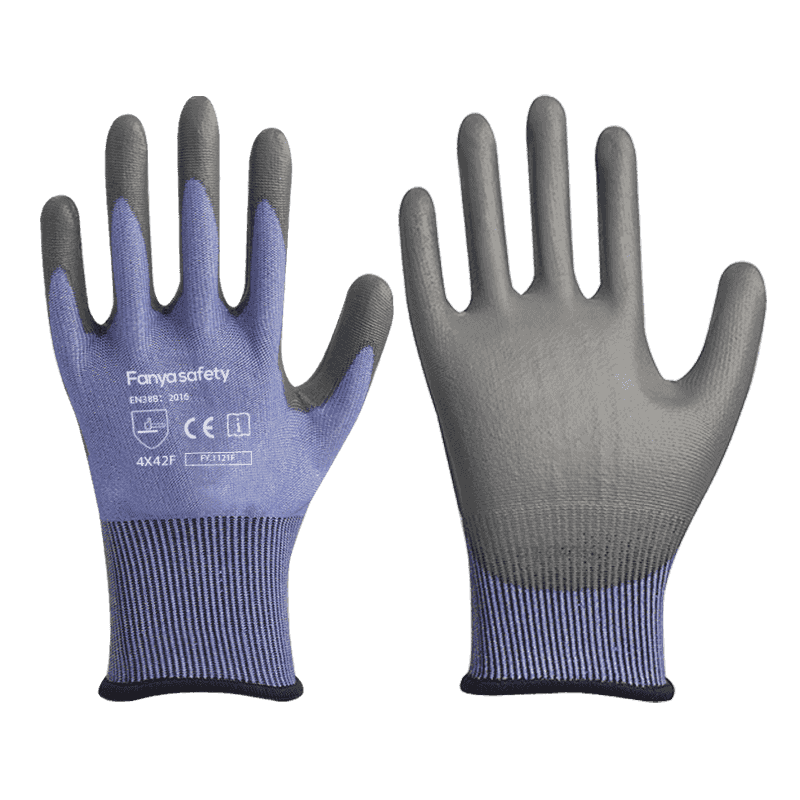
Many blue cut resistant gloves add a palm coating in polyurethane (PU) or nitrile. The coating can be manufactured in blue, navy, or black — and since the coating covers the palm and often the fingertips where most cut incidents occur, it adds an additional layer of protection beyond the knit liner's rated level. PU coatings are preferred for dry, precision tasks because they offer excellent tactile sensitivity. Nitrile coatings handle wet and oily conditions better, making them the right choice for wet fish processing or machine lubrication environments.
Food processing facilities that use inline metal detection systems can specify blue cut resistant gloves that incorporate metal-detectable additives into the fiber blend. These additives — typically fine metal powder or fiber — allow a glove fragment to trigger the detector threshold if it enters the product stream. This is especially important in applications like meat slicing, deli preparation, or produce cutting where the glove is in constant proximity to the product. Metal-detectable blue gloves are typically more expensive than standard models, but for facilities where product integrity is a primary concern, the added cost is justified.
Poultry, red meat, seafood, and produce processing operations run blue cut resistant gloves at ANSI A4 to A6 across deboning, trimming, filleting, and slicing lines. The blue color satisfies food safety auditors, and the cut resistance reduces hand and finger injuries — which are among the most common recordable incidents in food manufacturing. The U.S. Bureau of Labor Statistics has consistently ranked food processing as one of the higher injury-rate sectors in manufacturing, with hand and wrist injuries accounting for a significant share of lost-time incidents.
Automotive glass installation, windshield cutting, and flat glass fabrication all involve working with large, heavy panels with sharp edges. Blue ANSI A4 or A5 gloves with a nitrile palm grip allow workers to handle glass safely while maintaining the grip needed to maneuver panels accurately. In automotive assembly plants, color-coded PPE systems often designate blue gloves for glass-handling zones specifically, making the color a meaningful part of the safety infrastructure rather than an arbitrary choice.
Workers on recycling sorting lines face some of the highest rates of laceration injuries in any sector. Materials arriving on conveyors include broken glass, sharp metal edges, ceramic shards, and intact blades from discarded tools. Blue cut resistant gloves at ANSI A6 or higher provide meaningful protection in this environment. Because sorted materials are often mixed-color, the distinctive blue of the worker's gloves makes it easier for supervisors to monitor proper glove use from a distance and respond quickly when a glove is removed or damaged.
Pharmaceutical manufacturing and electronics clean rooms require gloves that meet both hygiene standards and cut resistance criteria when handling glass vials, ampoules, or precision components. Blue cut resistant liners worn under sterile outer gloves are a growing practice in this sector. The liner's blue color makes donning-order errors immediately visible — if a technician accidentally skips the outer glove, the blue liner is obvious during visual inspections rather than blending in with skin tone.
Housekeeping and janitorial workers who collect trash, clean restrooms, and handle sharps containers face underappreciated laceration and puncture hazards. Blue cut resistant gloves at ANSI A2 to A3 are appropriate for general housekeeping duties and provide meaningful protection against broken glass, exposed staples, and box cutter blades without the stiffness of heavier industrial models. The blue color aligns with hygiene-coded PPE systems that many hospitals, hotels, and office complexes already use.
Workers in cutlery factories and blade sharpening operations handle sharp edges constantly, and ANSI A7 to A9 blue cut resistant gloves — often incorporating stainless steel mesh — are the norm. At these protection levels, gloves are heavier and less flexible, but dexterity requirements for blade finishing work are lower than for food processing or assembly, so the trade-off is acceptable. Manufacturers in this space frequently source gloves with a blue outer knit over a steel liner specifically so supervisors can confirm appropriate PPE use at a glance.
The best cut resistant glove for a task is not necessarily the one with the highest protection rating. Over-specified gloves reduce dexterity, increase hand fatigue, and often lead to workers removing gloves during tasks where they feel inhibited — which defeats the purpose entirely. Matching glove specifications to actual task requirements is the most important decision a safety manager makes.
| Task Type | Recommended ANSI Level | Coating Preference | Liner Gauge |
|---|---|---|---|
| Dry assembly, light packaging | A1 – A2 | PU palm or uncoated | 18 gauge (thinner, more dexterity) |
| Glass handling, sheet metal | A3 – A4 | Nitrile foam palm | 13 – 15 gauge |
| Food processing (wet) | A4 – A5 | Full nitrile dip | 13 gauge |
| Recycling, scrap metal | A5 – A6 | Sandy nitrile or latex | 10 – 13 gauge |
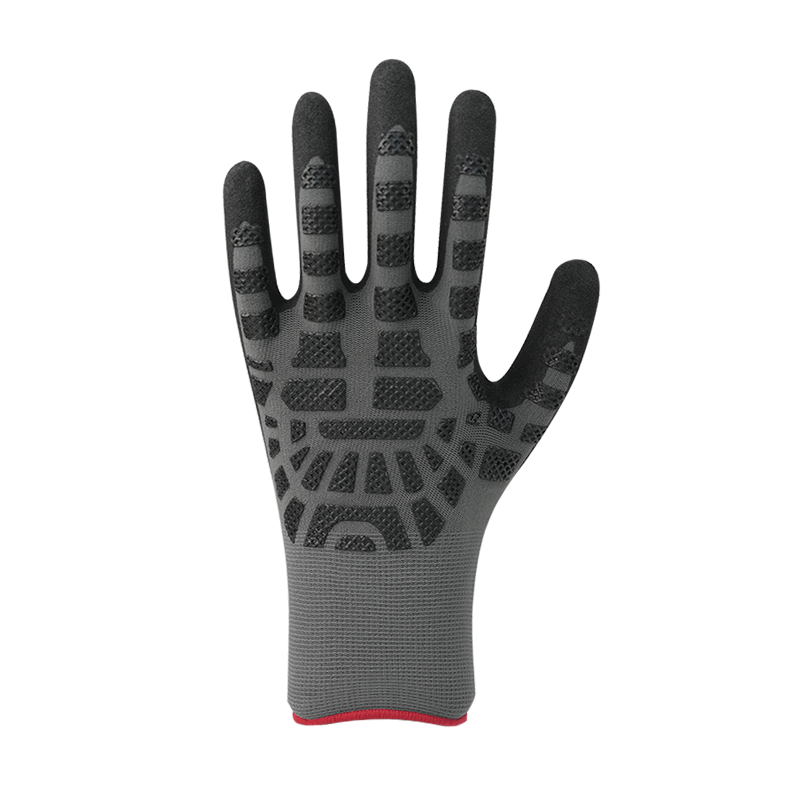
| Blade work, butchery | A6 – A9 | Uncoated or PVC grip dots | 10 gauge or steel mesh |
A cut resistant glove that fits poorly is not just uncomfortable — it is actively dangerous. An oversized glove creates loose material at the fingertips that can catch on machinery, reducing grip precision and increasing the risk of entanglement. An undersized glove restricts circulation, causes hand fatigue within an hour, and is often partially removed by workers who cannot tolerate the constriction through a full shift. Most manufacturers provide sizing based on hand circumference measured at the widest point of the palm excluding the thumb. For most adults, this ranges from 7 inches (size S) to 11 inches (size XXL), though women's sizing lines often extend down to XS at 6.5 inches.
When ordering blue cut resistant gloves for a team, the safest practice is to order a sample size run across XS to XL and have workers try them on during a safety briefing before the full order is placed. This reduces returns, improves comfort compliance, and gives the safety team firsthand knowledge of which sizes are needed in what proportions for their workforce. A workforce of 50 workers might need 5 XS, 12 S, 18 M, 12 L, and 3 XL — proportions that no generic size chart can predict accurately without a trial fitting.
Glove gauge refers to the knitting density of the liner — specifically, the number of needles per inch on the knitting machine used to produce it. A higher gauge number means more needles, finer yarn, thinner fabric, and greater tactile sensitivity. An 18-gauge glove is thin and precise, suitable for electronics assembly or quality inspection. A 10-gauge glove is thick, durable, and better suited for heavy materials handling. For most blue cut resistant glove applications in food processing and manufacturing, a 13-gauge liner strikes the right balance: protective enough to achieve A4 to A5 ratings while still allowing workers to feel the product and operate machinery controls without excessive fumbling.
HPPE-based blue cut resistant gloves are machine washable, and most manufacturers specify a maximum wash temperature of 40°C to 60°C depending on the coating type. PU-coated gloves tolerate repeated machine washing at 40°C without significant coating delamination for approximately 25 to 50 wash cycles. Nitrile-coated gloves are more durable in the laundry and often tolerate 60°C washes for 50 or more cycles. Aramid gloves should be washed in cool water without bleach, as chlorine bleach degrades aramid fibers over time and can reduce the actual cut resistance of the glove below its rated level even before the glove shows visible wear.
Tumble drying on low heat is generally acceptable for HPPE and nylon blends, but hang drying is preferable for coated gloves because high dryer heat can cause the PU or nitrile coating to crack or peel prematurely. After drying, inspect the palm and fingertip coating for any cracking, bubbling, or delamination before returning the glove to service.
The most common mistake in glove programs is keeping cut resistant gloves in service for too long because they appear intact visually. Cut resistance rating applies to new gloves — it does not account for the cumulative effect of abrasion, washing, and flexion cycling that degrades fiber integrity over time. A study published in the Journal of Safety Research found that cut-resistant gloves subjected to simulated real-world use for six months of daily wear showed measurable reductions in cut resistance even when no visible damage was present.
The cheapest blue gloves on the market are often made with the thinnest HPPE blends, the most basic knit structures, and the flimsiest coatings available. A glove that costs $0.80 per pair and needs to be replaced every three weeks costs more annually than a $2.50 per pair glove that lasts four months with the same wash-and-reuse cycle. Safety buyers who track total cost of ownership rather than unit price consistently find that mid-range and premium gloves deliver better value. Beyond the cost calculation, under-specified gloves increase injury rates, which creates costs — in medical claims, lost productivity, and worker morale — that dwarf any savings at the purchasing desk.
Purchasing managers who focus exclusively on cut resistance ratings sometimes spec gloves that are far heavier and stiffer than the task requires. A worker assembling small electronic components needs very different hand protection from a butcher trimming primal cuts — and forcing the electronics worker into an A6 steel-blend glove to be conservative actively harms safety by making it impossible to perform the task properly. The right approach is to assess the actual cutting hazards present (blade type, contact force, frequency) and match the glove to that specific risk rather than defaulting to the highest protection level available.
A blue cut resistant glove with a PU palm coating performs beautifully in dry conditions and loses most of its grip advantage as soon as the work surface becomes wet or oily. Facilities that process fish, use cutting lubricants, or operate in wash-down environments need nitrile-coated or latex-coated gloves. Purchasing the wrong coating type means workers experience poor grip and grip-related incidents — which can cause the same kinds of hand injuries the cut resistant liner was meant to prevent, through different mechanics.
Glove programs selected entirely by purchasing departments without input from the workers who actually wear them consistently underperform. Workers know which tasks require the most dexterity, which conditions cause the most discomfort, and which glove features they find practical versus frustrating. Involving even a small working group — two to five people from the relevant task area — in glove trials before the full purchase decision dramatically improves adoption rates and reduces the incidence of workers going gloveless because they dislike the issued product.
Ordering blue cut resistant gloves and issuing them to workers is only the beginning of an effective glove program. Safety managers who do not track glove replacement frequency, worker satisfaction, and hand injury incident rates after deployment have no feedback loop to optimize the program over time. At minimum, tracking the number of gloves issued per worker per quarter and comparing hand injury rates before and after a glove program change gives the data needed to justify continued investment and identify which task areas need higher or lower protection specifications.
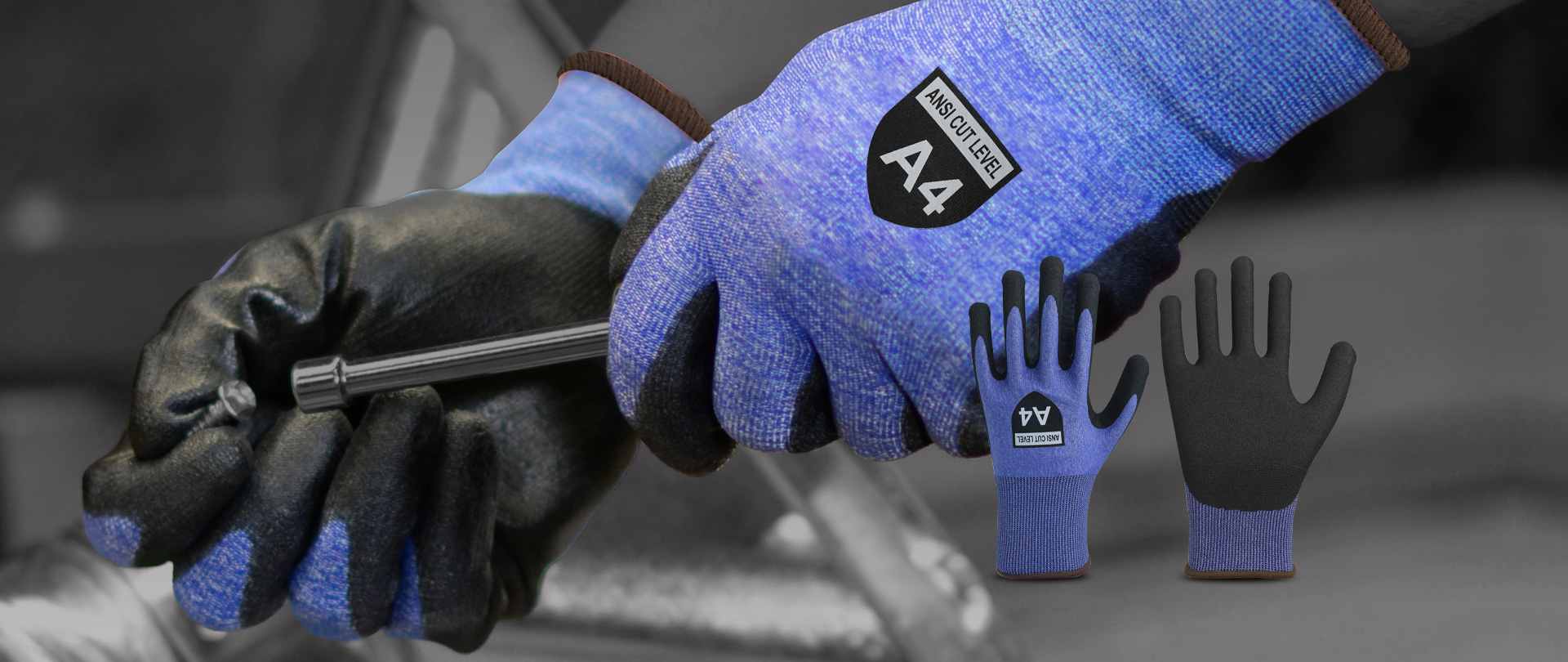
Not every blue glove is a cut resistant glove, and not every job that requires blue gloves also requires cut resistance. Disposable blue nitrile and latex gloves serve a completely different function from reusable blue cut resistant gloves, and confusing the two categories leads to either over-protection (costly, uncomfortable) or under-protection (dangerous). Here is a direct comparison:
| Feature | Disposable Blue Nitrile Gloves | Reusable Blue Cut Resistant Gloves |
|---|---|---|
| Cut Protection | None (tears on contact with blades) | ANSI A1 through A9 depending on model |
| Chemical Barrier | Excellent (intact nitrile film) | Depends on coating; knit liner alone offers none |
| Tactile Sensitivity | High (thin film) | Moderate to low (depends on gauge) |
| Cost Per Use | Low per glove, high over time (single use) | Higher upfront, lower per use over lifecycle |
| Hygiene | Single-use, no cross-contamination risk | Requires proper laundering between uses |
| Ideal Application | Medical prep, food contact (no blades), cleaning | Cutting, slicing, glass, recycling, blade work |
| Foreign Body Visibility | High (blue film visible against most foods) | High (blue knit/coating visible against most surfaces) |
Some facilities use both types in combination: disposable blue nitrile gloves worn over reusable blue cut resistant glove liners. This combination addresses both the chemical barrier need (the outer disposable) and the cut protection need (the inner liner), and is common in pharmaceutical manufacturing, high-hygiene food operations, and laboratory settings where contamination control and blade hazards coexist. The outer disposable glove is changed frequently or whenever it tears; the inner liner is laundered on a scheduled cycle.
No. Blue is a color, not a protection specification. Disposable blue nitrile or latex gloves offer no cut resistance and will tear on contact with a sharp edge. Blue cut resistant gloves are a specific product category made with HPPE, steel, aramid, or glass fiber blends that have been tested to an ANSI or EN 388 cut resistance standard. When shopping for cut resistant gloves, always check the ANSI cut level (A1 through A9) or EN 388 rating on the product, and do not assume color indicates protection level.
For most food processing applications involving knives and meat cutting, ANSI A4 to A5 is the standard recommendation. Deboning and trimming operations where workers use sharp boning knives at high frequency often go to A5 or A6. Produce cutting and packaging operations with less aggressive blade contact may be adequately served by A3. The specific cut level should be determined by assessing the blade type, the force applied, and the frequency of contact — not by picking a single number for the entire facility regardless of task variation.
Yes, most blue cut resistant gloves with HPPE or nylon knit construction are machine washable and designed for repeated use. The exact number of wash cycles before replacement depends on the glove model, the wash temperature, and the intensity of use between washes. PU-coated gloves typically hold up for 25 to 50 wash cycles; nitrile-coated gloves can go 50 or more cycles. Always follow the manufacturer's laundering instructions, and inspect the coating and knit integrity after each wash cycle. A glove program that tracks wash counts per glove per worker achieves lower per-use costs and better protection confidence than one that guesses at replacement timing.
The requirement stems from food safety best practices around foreign body detection. Blue is rare in natural food colors, which makes a fragment of a blue glove visible against most raw and processed food products, conveyor belts, and cutting surfaces. Many food safety auditing frameworks and HACCP (Hazard Analysis and Critical Control Points) plans include specific requirements for visually detectable PPE, and blue gloves satisfy that requirement in most food categories. Some facilities go further by requiring metal-detectable blue gloves that can also trigger inline metal detection equipment.
No. Cut resistant gloves reduce the severity and likelihood of lacerations from blade contact, but they do not prevent all hand injuries. They are tested for cut resistance specifically — not puncture resistance, crush resistance, or impact protection, though some models include additional features for those hazards. A cut resistant glove rated at ANSI A5 will resist significant cutting force but will not protect a hand caught under a heavy press or struck by a falling object. A comprehensive hand safety program addresses all hazard types present in the workplace, not just cuts.
Visual inspection and calendar-based replacement are the two most practical methods. Look for visible snags, thread pulls, or holes in the knit at the palm and fingertips — the highest-contact areas. Check the coating for cracking, peeling, or bubbling. For gloves with a blue outer fiber, noticeable color fading can indicate the outer fiber is breaking down, which correlates with degradation of the protective composite. As a backstop, even visually intact gloves should be replaced on a scheduled cycle of three to six months in high-use environments, since mechanical degradation of cut resistance occurs before visible damage appears.
The more common practice is to wear disposable gloves over cut resistant liners, not under them. The cut resistant liner goes on first as the protective layer, and the disposable glove is worn on top to provide the chemical barrier and maintain hygiene. This layered approach is standard in pharmaceutical manufacturing and food processing environments where both hazards — chemical exposure and blade contact — are present. Wearing the cut resistant glove on the outside would make it harder to change the hygiene layer and could introduce contamination during the change process.
They are measured by different test methods and are not directly equivalent. ANSI/ISEA 105 uses a straight-blade TDM test and rates gloves A1 through A9 based on grams of force required to cut through the material. EN 388 uses a rotary blade (Coup test) and rates cut resistance 1 through 5, with an additional ISO 13997 TDM result often noted alongside for higher-performing gloves. An EN 388 Level 3 glove corresponds roughly to the midpoint of the EN 388 scale, but the specific grams of cut force it can withstand depends on the individual product's ISO 13997 test result. When comparing international products, ask the manufacturer for both the EN 388 rating and the ISO 13997 result to make a meaningful comparison with ANSI-rated gloves.
বায়োডিগ্রেডেবল গ্লাভস: সম্পূর্ণ ওয়ার্কিং গ্লাভস গাইড
নন ল্যাটেক্স গ্লাভস: অ্যালার্জির জন্য ল্যাটেক্স গ্লাভসের সেরা বিকল্প
আপনার ইমেল ঠিকানা প্রকাশ করা হবে না। প্রয়োজনীয় ক্ষেত্রগুলি চিহ্নিত করা হয়েছে *
আপনি এই ফর্মটি ব্যবহার করে আমার সাথে যোগাযোগ করতে পারেন।